
At the 60th International Art Exhibition – Venice Biennale, the Holy See dedicated its Pavilion to human rights and the plight of the marginalised, with a view to fostering a culture of encounter, a central tenet of Pope Francis’s Magisterium.

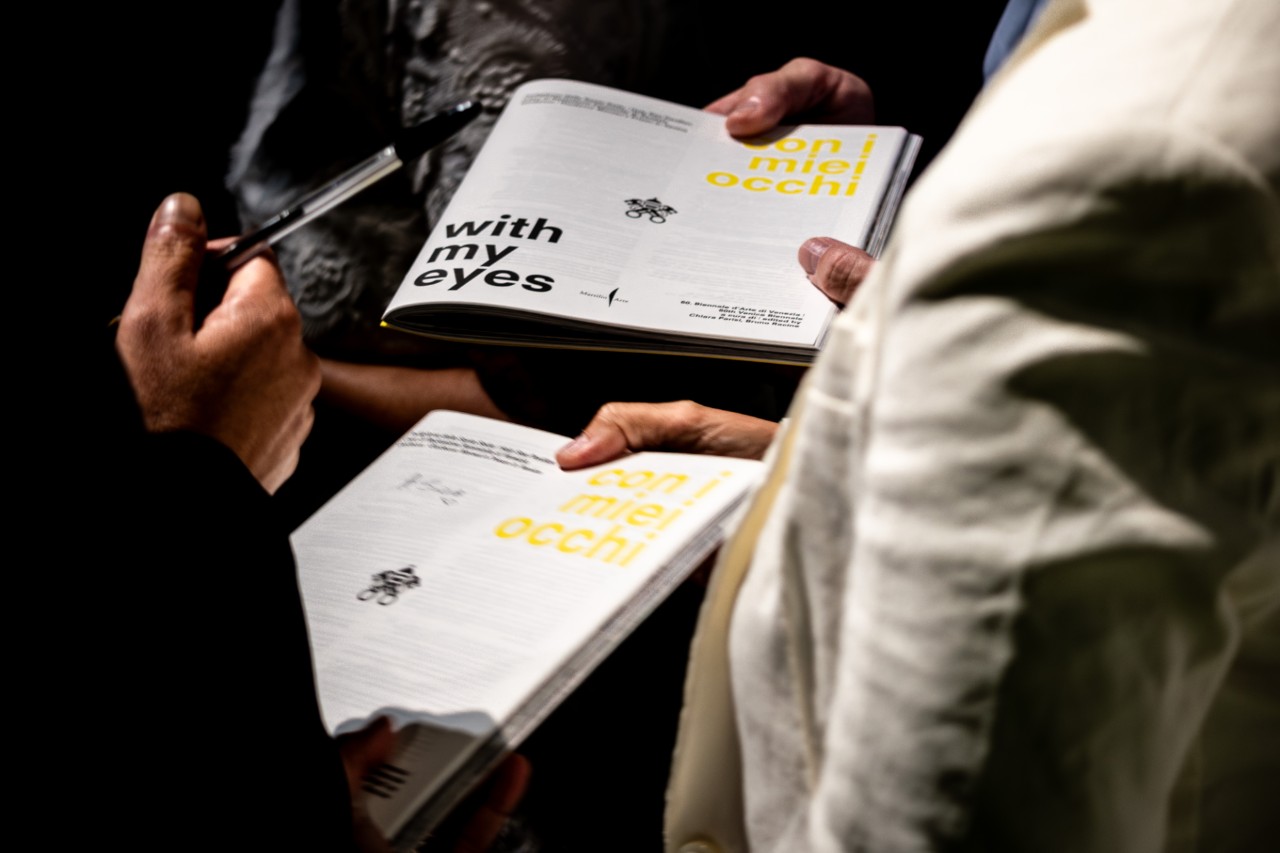
The Giudecca Women’s Prison hosted the Holy See’s Pavilion, entitled “With My Eyes”, an invitation to see with one’s own eyes, breaking free from the automatism of an age of noisy image overload and, on the other hand, from the ease with which we now delegate the exercise of our vision of things to technology.

Chiara Parisi and Bruno Racine were appointed curators of the Pavilion by Cardinal José Tolentino de Mendonça, Prefect of the Dicastery for Culture and Education and commissioner of the project. Featuring internationally renowned artists: Maurizio Cattelan, Bintou Dembélé, Simone Fattal, Claire Fontaine, Sonia Gomes, Corita Kent, Marco Perego & Zoe Saldana, Claire Tabouret, and a special contribution from Hans Ulrich Obrist.

Among the main sponsors is Intesa San Paolo, represented by Michele Coppola, in collaboration with the Department of Penitentiary Administration of the Ministry of Justice.
CURATORS OF THE PAVILION

ARTISTS OF THE PAVILION

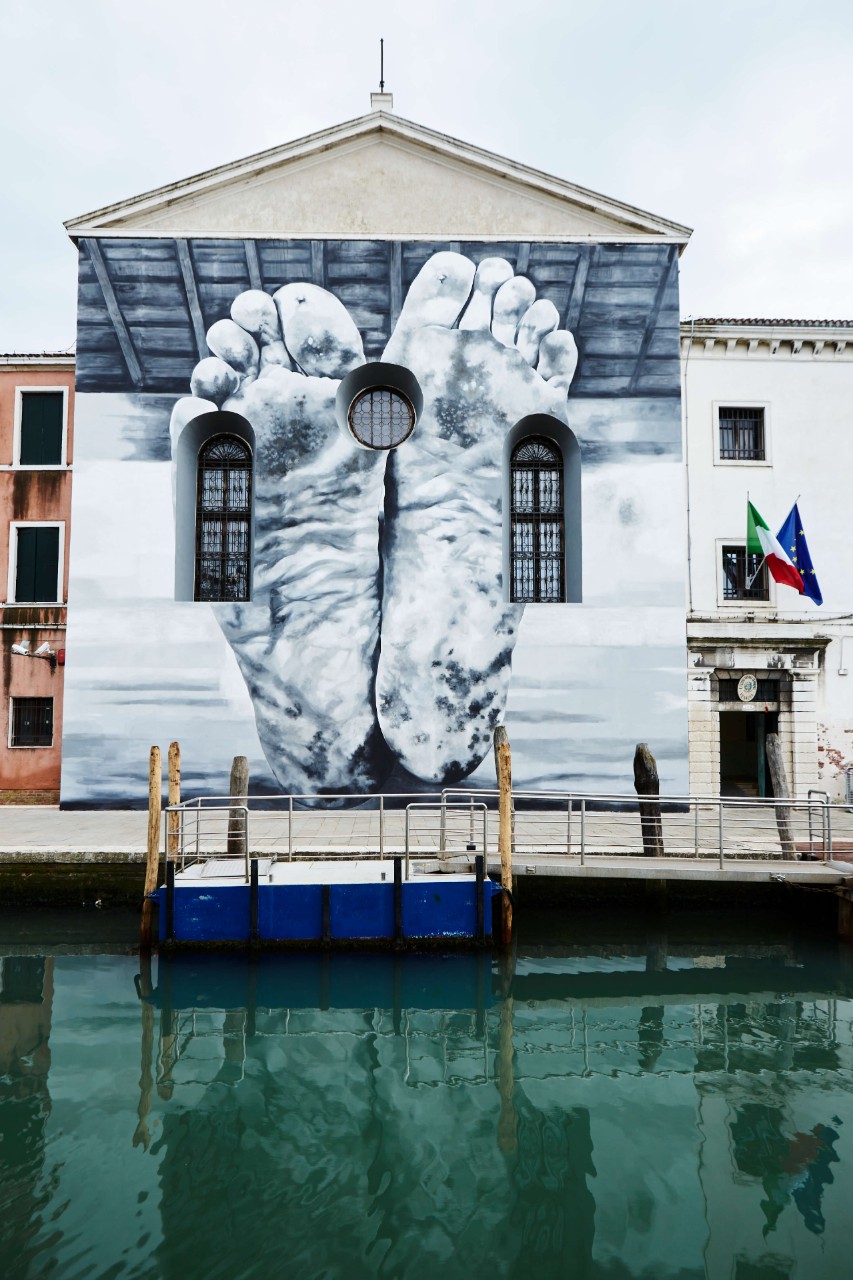
The Pavilion project, entitled "With My Eyes", was presented at the Giudecca Women’s Prison, which was enhanced by a number of art installations. The only work situated outside the prison, by Maurizio Cattelan, was a painting of two feet, beyond which a reclining body could be glimpsed in the distance.

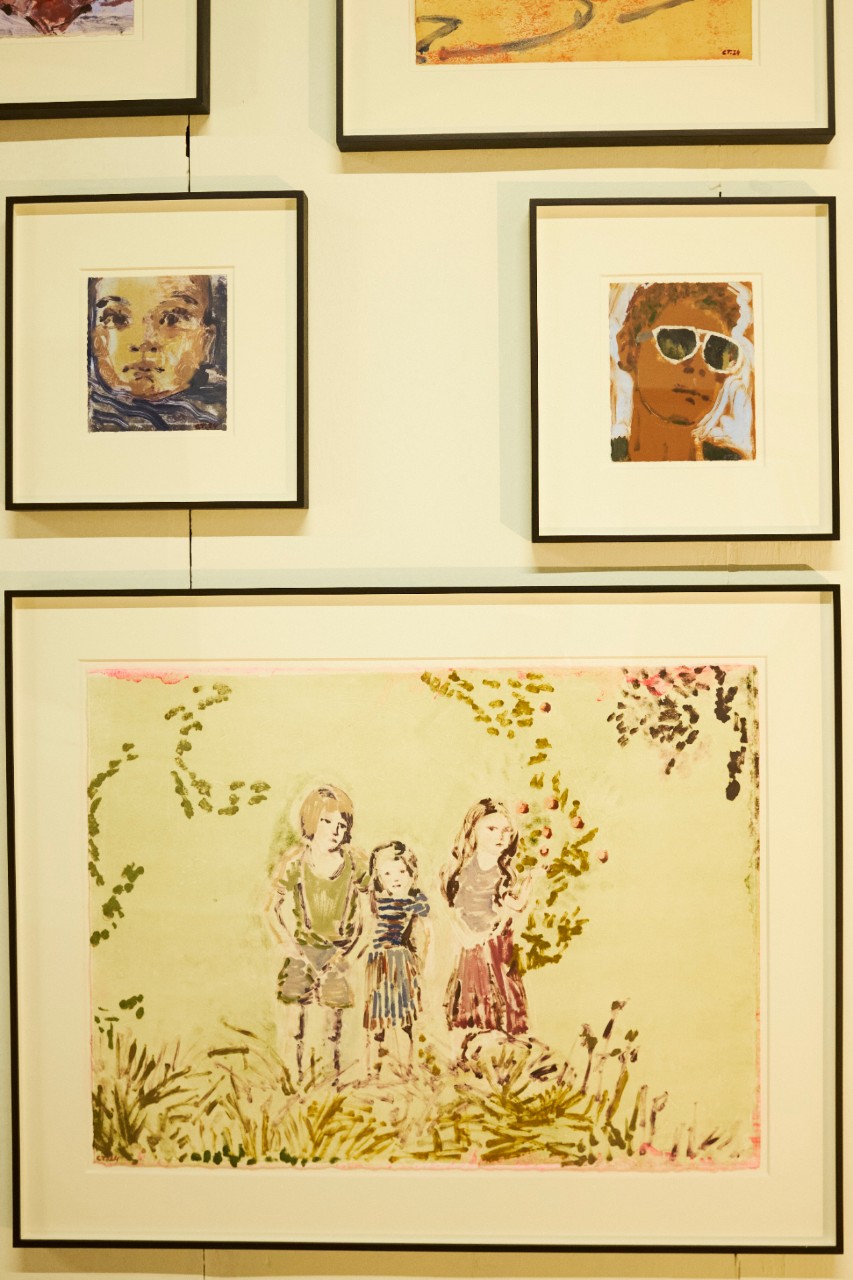
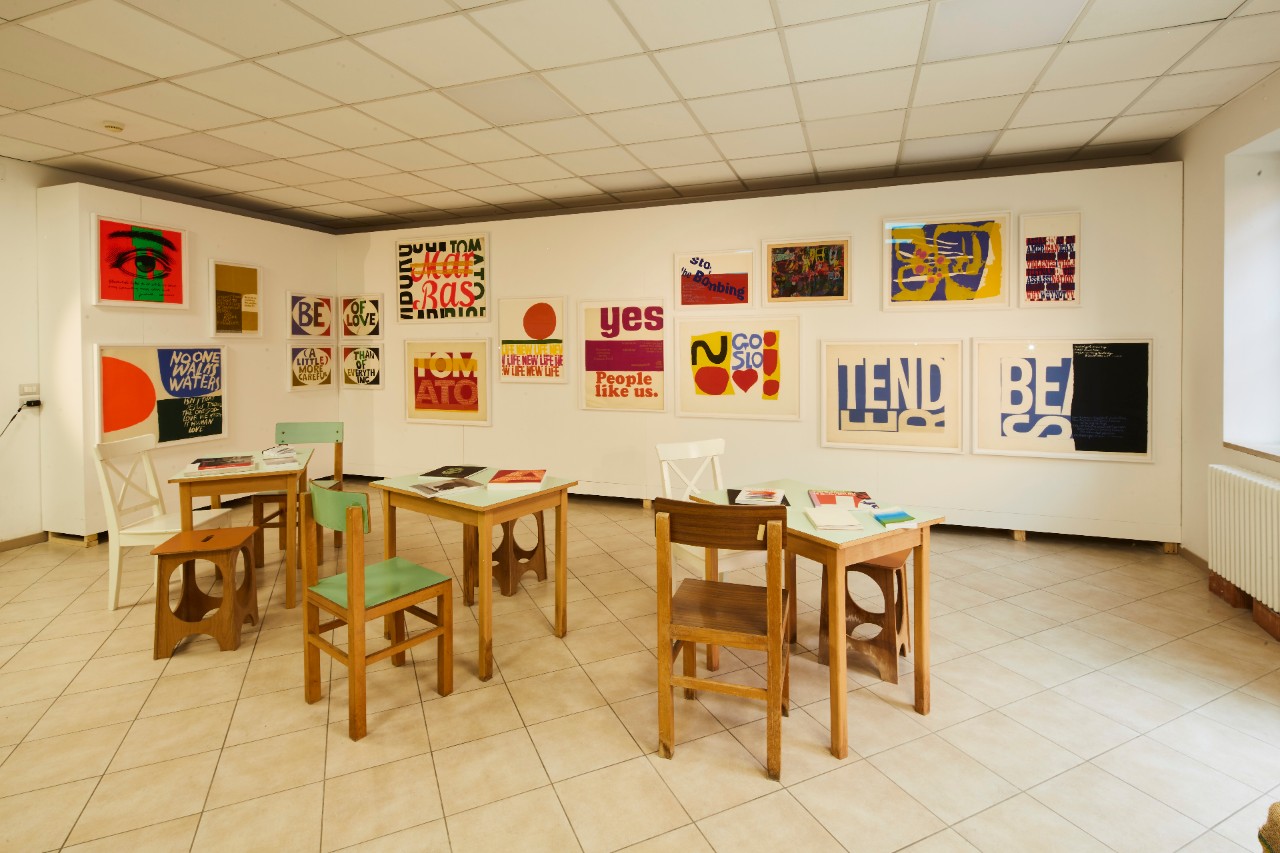
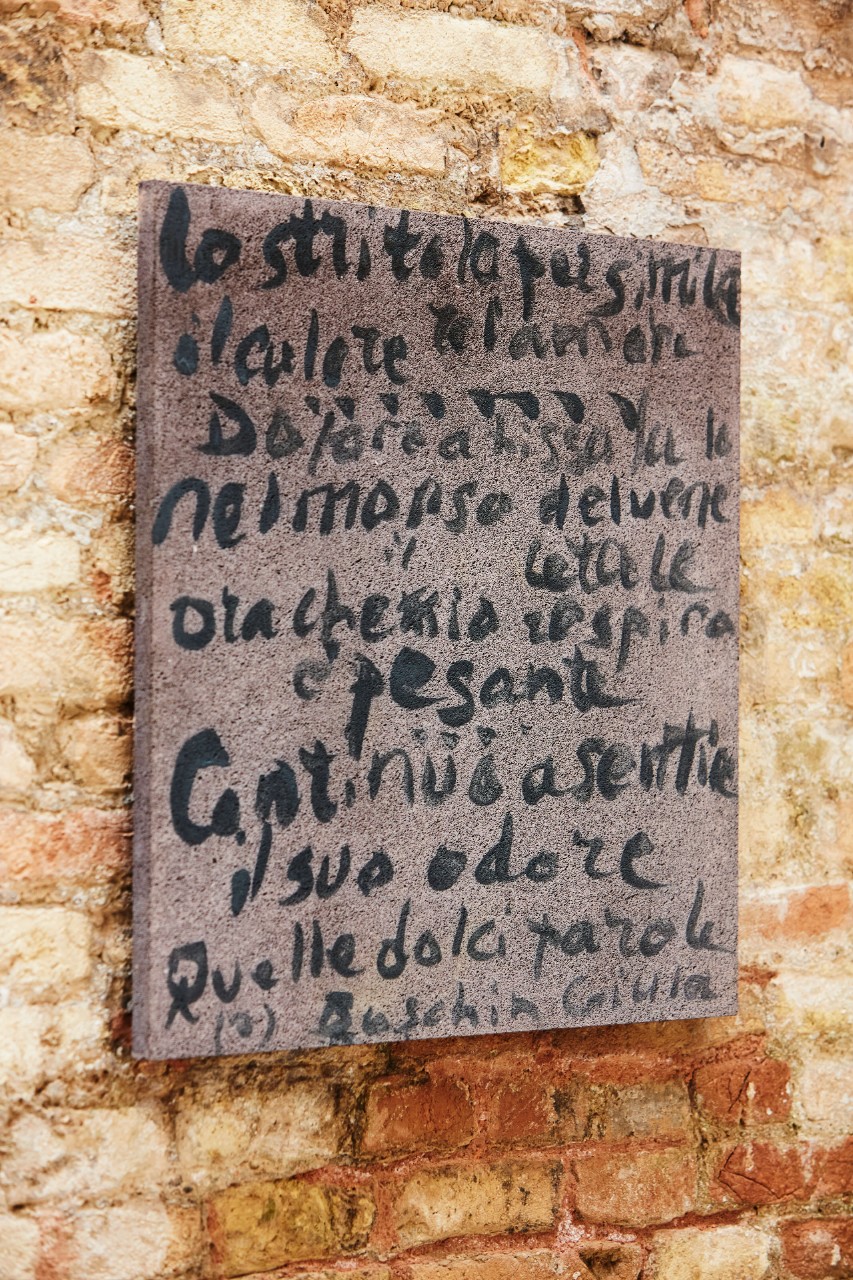
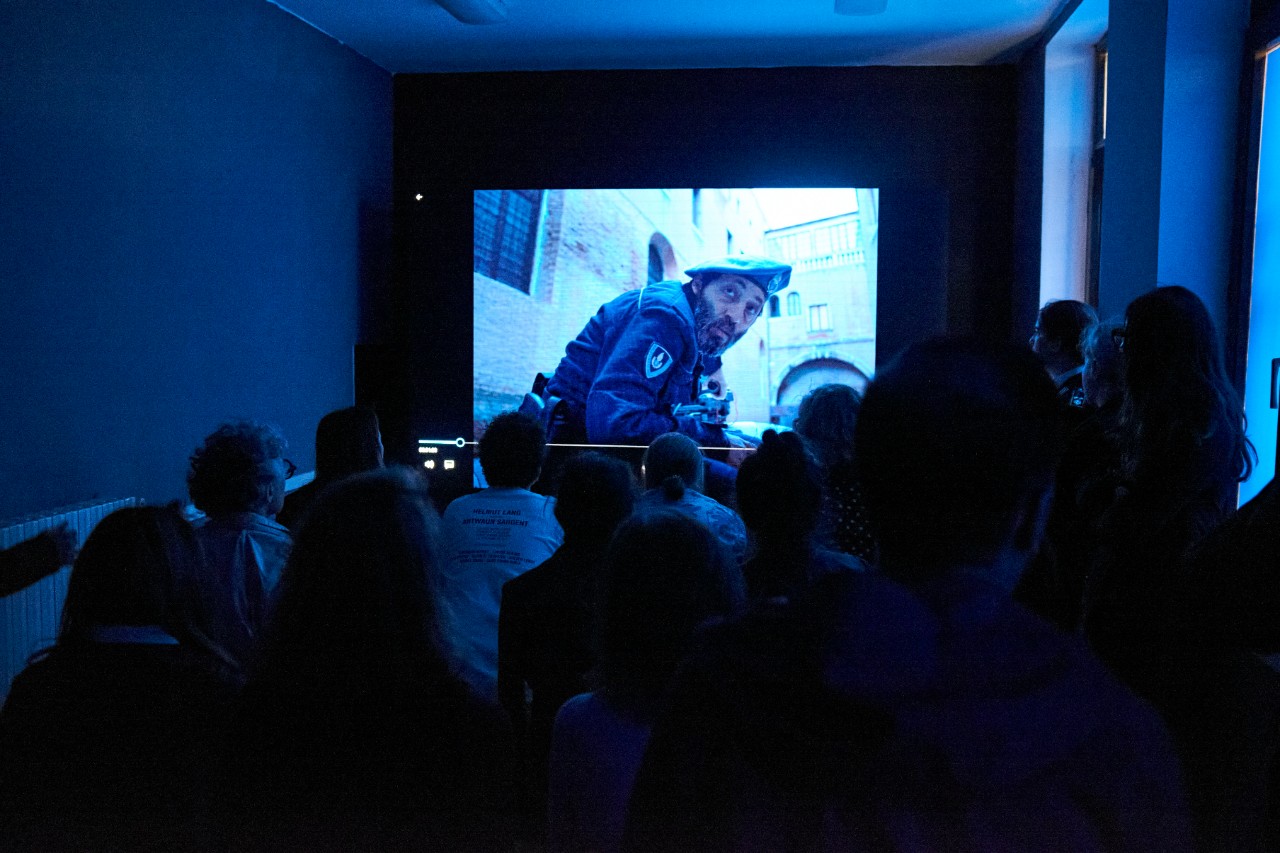
The first stop inside the prison was entrusted to Corita Kent, who transformed unlikely materials cut from advertisements into collages capable of revealing traces of the contemporary search for God. Next came Simone Fattal’s panels, on which she reproduced texts and poems received from the women in the prison, followed by the works of the Claire Fontaine collective. In the courtyard, meanwhile, Marco Perego & Zoe Saldana presented a film that turned the gaze of the female prisoners into a parable of hope. The artist Claire Tabouret, on the other hand, sought to highlight the original purity and innocence of the human being on earth through a gallery of portraits of the child inmates and their children and grandchildren.

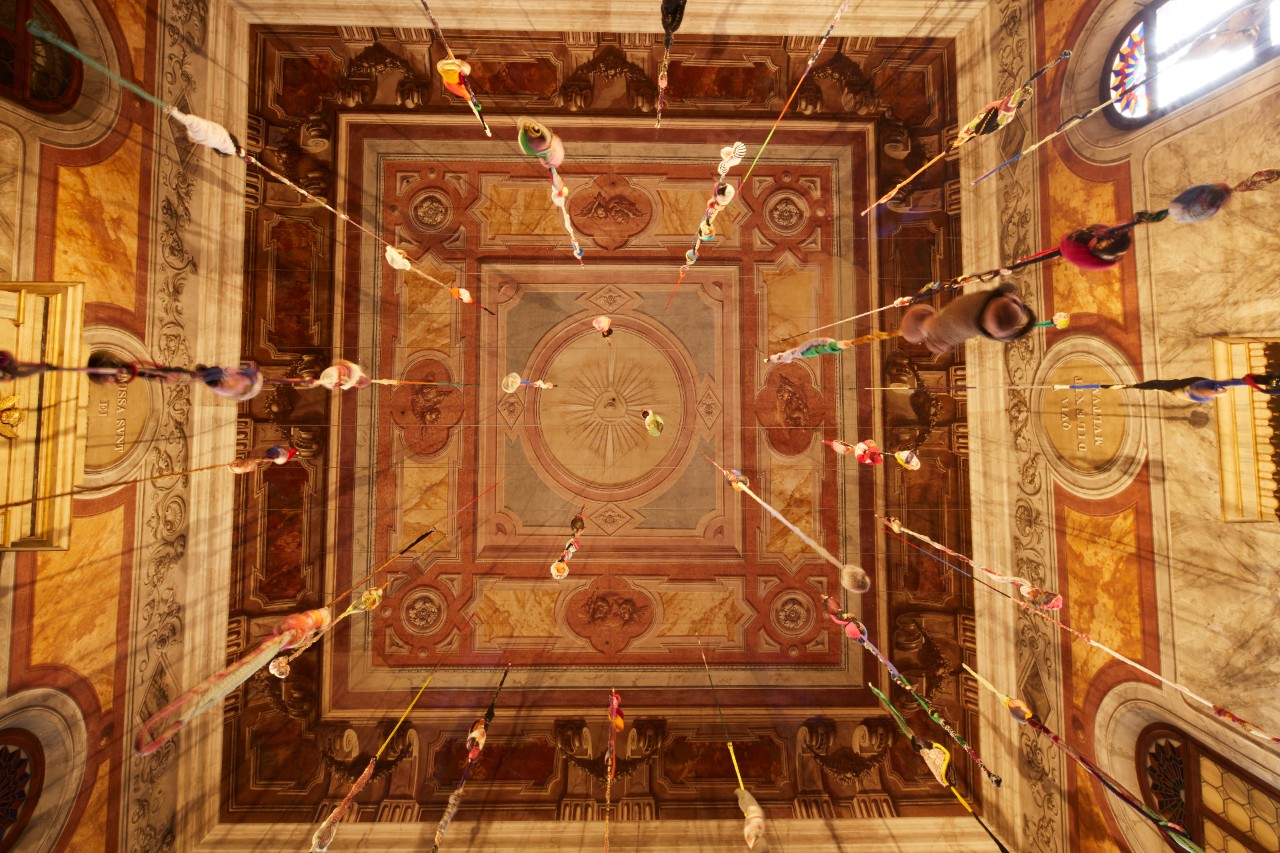
The exhibition concluded with a contribution by the Brazilian artist Sónia Gomes, who decorated the ceiling with sculptures made from fabrics worn by the women and subsequently donated to the artist, urging us to look up. The physical works in the Pavilion were accompanied by a choreography by Bintou Dembelé. 

© Marco Cremascoli