
Sport and Hope
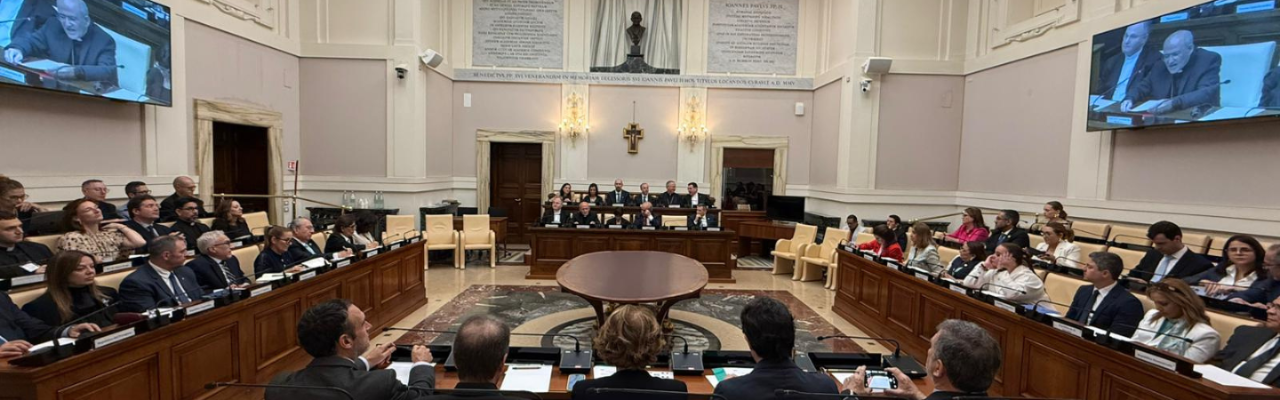
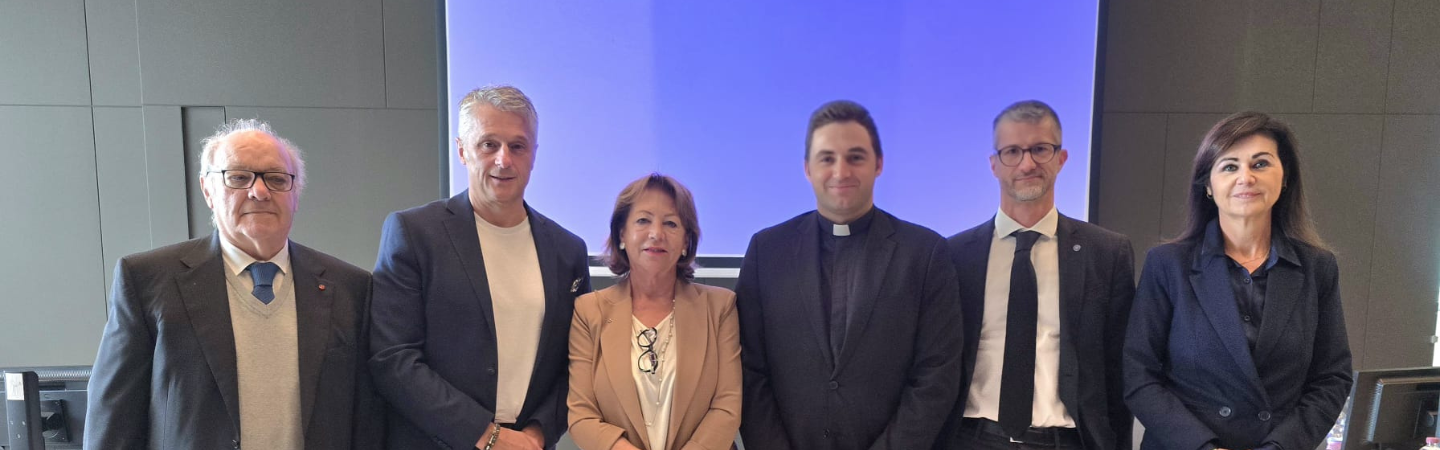
Sport as an engine of values, identity and regional development: this was the topic of discussion on Saturday the 27th of September in Udine at the conference “Sport as social prophecy”, organised within the initiative “Listen, read, grow” and promoted by the Friuli Foundation in collaboration with the University of Udine, the Dicastery for Culture and Education and the CONI Friuli Venezia Giulia Regional Committee.
The proceedings were opened by Mario Anzil, Vice-President of the Friuli Venezia Giulia Region, who pointed out that the region ranks first in Italy in terms of investment in sport, a tangible sign of a political choice that recognises not only the competitive value of sport, but also its social and educational value, capable of strengthening cohesion and development in the region. The president of the regional CONI, Andrea Marcon, then took the floor, emphasising the role of the mountain and of winter activities in Friuli's identity, a heritage to be valued not only from a sporting point of view but also from a cultural and economic one.
The topic of hope was central to the speech given by Father José Miguel Cardoso, from the Dicastery for Culture and Education (Holy See), who explained why the Church is interested in sport, looking back at a long history from St Paul to the Fathers of the Church, from the conciliar decrees of the Middle Ages to contemporary documents, and bringing Greek mythology into dialogue with the Judeo-Christian tradition to explain the fullness of the theological concept of hope. Hope, he pointed out, arises precisely from confrontation with evil and becomes the ability to discern/see good in the midst of difficulties. In this sense, sport today is a space that offers society a rediscovery of vital values faced with some of its “dangerous” features: the value of life in a society of fatigue, the value of the other in a society of depression, the group/team/community in a globalised society, nature/reality/space in a digital society, defeat in a competitive society, and spirituality in a society that risks living only in immanence.
Professor Cristiana Compagno focused on resilience, a quality that defines sport and Carnia, her homeland, and which unites both its athletes and the women who, between 1915 and 1917, demonstrated strength and character through the fundamental role they played in the war. They were known as ‘Portatrici Carniche’ (Carnic Porters). Professor Michela Mason illustrated how the University of Udine is training new sports managers and highlighted the role of sports tourism, which is not limited to participation in events or activities, but becomes a narrative and symbolic driving force for the region, capable of strengthening its identity, stimulating infrastructure and diversifying its offering.
Olympic champion Silvio Fauner, winner of five Olympic medals and ten world championships, spoke about the decisive role played by his family, his local community and sports associations. Today, as an organiser, he lives sport with the same passion and responsibility, promoting events that strengthen the community and bring Friuli to the forefront of the international scene, including the Nordic Skiing World Masters Championships scheduled to take place in Sappada and Forni Avoltri, with the participation of over 1,200 athletes from all over the world.
The conclusion was entrusted to philosopher Luca Grion, who extended greetings from the president of the Friuli Foundation, Bruno Malattia, and invited the audience to view sport not as rhetoric, but as a concrete experience of education, growth and community, emphasising the good fortune of living in a region capable of transforming a passion for sport into a true cultural and social driving force.
/Viaggio-Apostolico-Spagna.png/_jcr_content/renditions/cq5dam.web.1280.1280.png)