

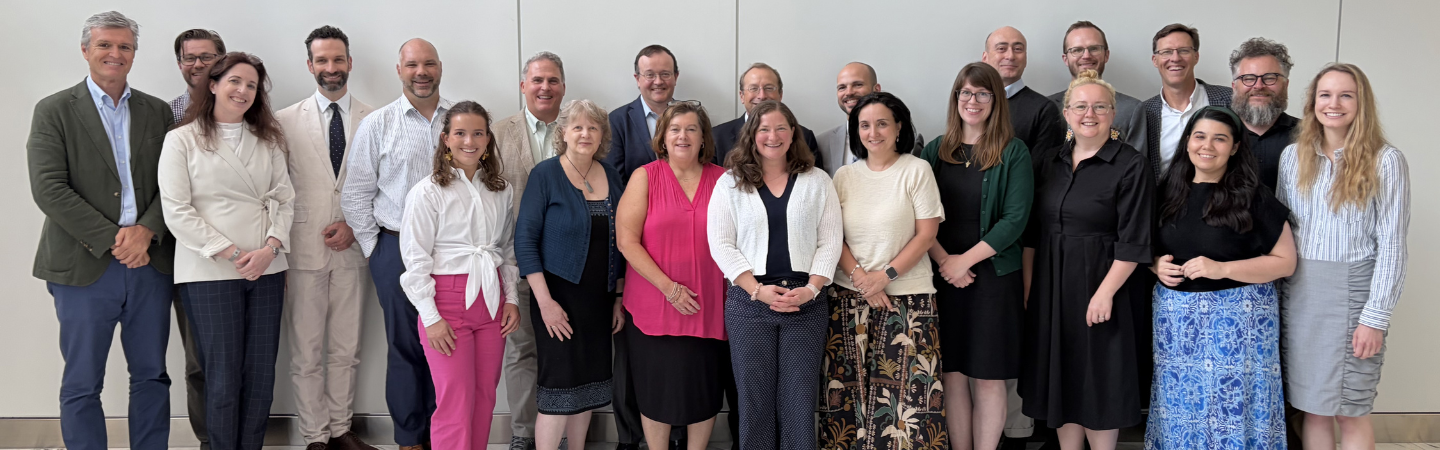
5th Plenary Meeting of the american working group on Applied AI Ethics
On June 9–10, the Center for Digital Culture, with the sponsorship of the Institute for Ethics and the Common Good at Notre Dame University, hosted the annual plenary meeting of the american working group on Applied AI Ethics. The event brought together 19 scholars from leading universities across the United States, including new participants from Boston College and Marquette University.
During the meeting, participants discussed the major teachings of the encyclical Magnifica Humanitas. A key point of discussion was the idea that creating a truly “ethical AI” is ultimately an illusion, since machines cannot embody moral virtues or possess values. While AI can pursue optimized goals, human development is an inner process closely connected to our finitude, limitations, vulnerabilities, and personal relationships.
Likewise, ongoing research work on technocratic culture and the future of work was reviewed. For the former, to understand current technology, it is proposed to analyze the philosophies that drive it in environments such as Silicon Valley. Although it seeks to improve society, it often starts from a reductionist view that attempts to quantify human life. Against this, a humanistic vision based on prudence and responsibility is proposed that responds to the ideals of perfection and self-improvement promoted by AI. Regarding the future of work, the impact of AI goes beyond the substitution of jobs: it demands prioritizing dignity over efficiency and recognizing work as a space for personal development. In a future conditioned by AI, leisure should also be valued as a space for mutual care and the strengthening of community relationships.
One of the working sessions consisted of two public panels dedicated to the publications Reclaiming Human Agency and Educating in the Age of AI. In the first, the co-editors clarified the differences between AI agents and true human agents, as well as the way in which current AI is influencing our actions. In the second, the authors advocated for the need to ensure integral human development, not through mere individual training, but through the formation of people capable of using new tools to address technology without losing their human nature.
Finally, the group emphasized that the humanistic debate surrounding AI should not remain confined to academic, philosophical, or theological spheres. These ideas must be communicated effectively to the broader public and to institutions so that they can serve as an “ethical compass” during a time of profound technological transformation.